Leg swelling can be caused by many factors. Two common sources of chronic leg swelling are Chronic Venous Disease and Lymphedema. Millions of people develop and live with these conditions. Given the chronic and progressive nature of these conditions, consistent and often lifelong treatment is required for them to be effectively managed.
Venous Ulcer
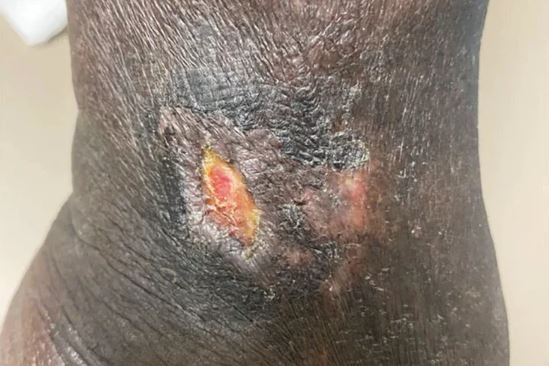
Venous Leg Ulcers are open sores caused by underlying venous (vein) circulatory disease. They tend to form around the ankle region, and may not heal without proper treatment. Treatment of Venous Leg Ulcers takes into account proper care of the ulcer itself, as well as treatment of the underlying circulatory disease.
Venous Disease
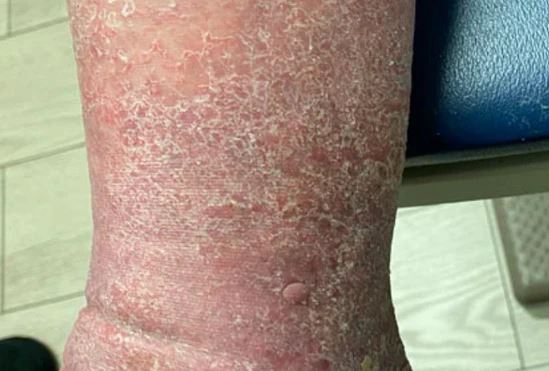
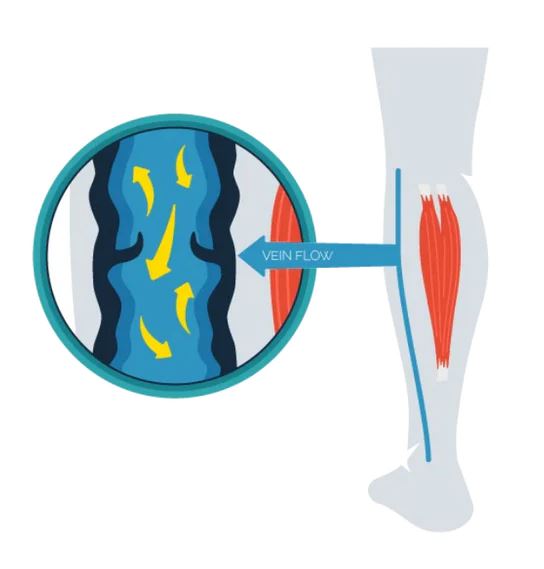
Venous swelling can be the result of damaged vein valves allowing the back-flow (reflux) and pooling of blood in the lower leg. This pooling causes the venous pressure to increase, weakening the veins and further compromising the venous blood-flow.
If the swelling is not managed it can become Chronic Venous Insufficiency (CVI), which requires intervention / management. CVI can manifest in different levels of severity. Due to the progressive nature of the disease, unmanaged venous swelling and hypertension can lead to venous ulcers, which are open sores that are often slow to heal.
Lymphedema
Lymphedema is when fluid builds up in the the lymph system and is unable to adequately drain. This typically occurs in the arms or legs. There are various causes of lymphedema: Congenital, Post Surgery, Radiation, Infections.
Current preventative methods include manual lymphatic drainage, lymphatic pumps, and compression stockings. The drawbacks surrounding these measures are that manual drainage requires a trained expert, lymphatic pumps are restrictive, and typical compression stockings often are too tight and difficult to put on.
Why Compression Works
Compression therapy is the application of external pressure to the leg. It works by acting as an outside support to prevent swelling and by enhancing the body’s natural ability to return fluid from the legs against gravity, with two important methods of action:
1. A Supporting Effect – helps to reduce the available limb volume to manage the amount of leg swelling.
2. A Dynamic Effect – that compression causes that helps improve circulation of blood and fluid, particularly when the user walks around. Compression squeezes the circulatory system into better contact with the muscles (for example, calf with lower-leg compression) to improve the body’s efficacy of fluid movement. Those with chronic venous disease may not get fully effective circulation without compression.
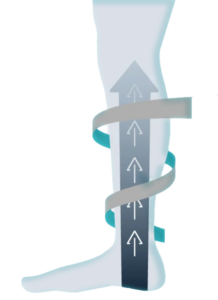
Gradient compression is a standard treatment and prevention for lower-leg venous disease and lymphedema. Gradient compression squeezes more at the ankle and less towards the knee, helping move blood back towards the heart.
How Compression Helps Chronic Venous Insufficiency (CVI)
CVI means High Standing Pressure and Backflow at Rest.
Activity does not properly improve venous return for high pressure relief.
Compression can improve venous return for patients with CVI.
Treating Venous Leg Ulcers
Venous ulcers don’t heal like a normal cut, because they aren’t like a normal cut. Venous leg ulcers are open sores associated with underlying venous disease. There is a lot of detail involved, but the basics are pretty simple, to heal a venous leg ulcer one has to:
1. Manage the wound, providing a healthy place for skin to regrow
2. Manage the underlying venous disease, reversing the venous hypertension at the root of the problem.
Managing the Wound
Wound Dressings are used as a primary dressing on top of the venous leg ulcer to help provide a healthy place for skin to grow. VLU dressings, typically foam, are made to absorb the harmful fluid oozing from the wound (exudate) without totally drying the wound bed out.
Wound dressings are changed frequently to keep the wound clean.
Managing the Underlying Venous Disease
Leg Compression is then applied on top of the wound dressing to address the underlying venous disease. Compression acts as an outside support to prevent swelling and by enhancing the body’s natural ability to return fluid from the legs against gravity. Proper compression therapy reduces swelling, venous hypertension, and the underlying disease.
Why AeroCare Wound Care Solution is Better:
Improved Treatment
Accurate Compression
Better Venous Return
Eliminates Compression Degradation
Reduced Maceration
Better Patient Experience
Improved Comfort and Quality of Life
Reduced Clinical Visits
Ability to Shower and Do Dressing Changes at Home
Better Management of Condition and Symptoms
Clinical Efficiencies
Faster Visits, Improved Staff and Space Utilization
Lower Costs
Improved Consistency and Outcomes
Venous Ulcer Success Stories
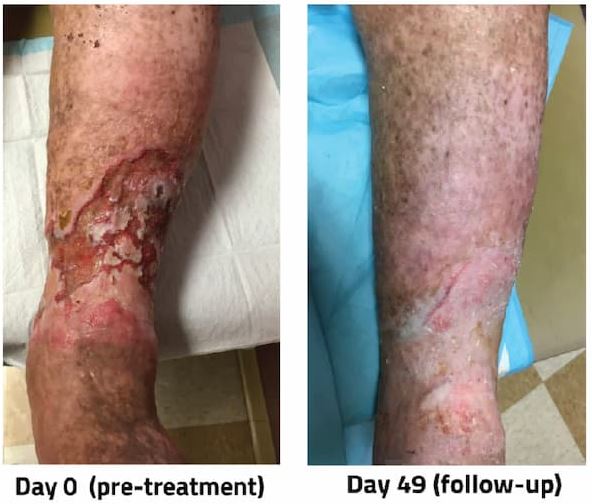
Venous Ulcer Case Study: 49 Days to Wound Closure!
A 79-year-old female with chronic venous insufficiency and a large circumferential venous ulcer chose Aero-Wrap™ after 2 years of no luck with other treatments.
She used the Aero-Wrap ™ with the Aerogauge™ on the highest pressure of 40-50mmHg. The dressings needed to be changed every 4-5 days in the beginning and once a week toward the end of healing.
Previous treatments that had failed include 2-layer and 4-layer compression bandages applied once weekly by visiting nurse services.